
- Arrest Records
- Judgments
- Bankruptcies
- DUIs & DWIs
- Felonies
- Warrants
- Jail Records
- Lien Records
- Sex Offenses
- Misdemeanors
- Criminal Records
- Federal Dockets
What are California Court Records?
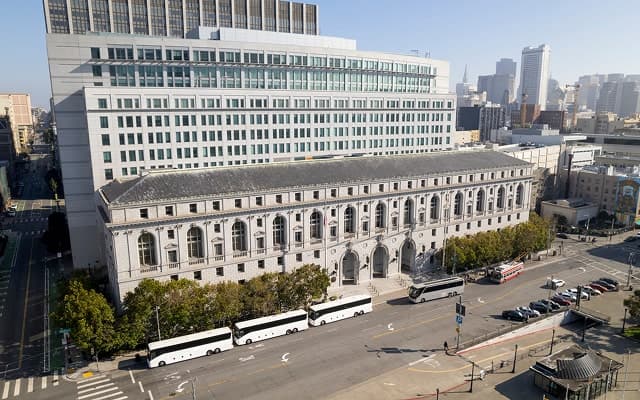
California has an estimated population of over 39 million residents and spans 163,696 square miles, making it the most populous state and the third largest by land area. The state is served by a robust court system comprising the Supreme Court, Courts of Appeals, and Superior Courts. This court system processes over four million new cases annually, with detailed records maintained for each case.
Court records document what happened in a court proceeding, including files, documents, and materials submitted and generated throughout legal proceedings. Per California court rules, court case files are public records subject to public inspection. Common court records in California include:
Docket Sheet
Dockets are detailed chronological records that track all documents and filings associated with a court proceeding. This includes submissions from the court, legal representatives, and other parties involved, such as witnesses or experts.
Judgments and Orders
These are official decisions a judge makes at the end of a court proceeding. After the trial ends, the judge signs the final judgment outlining each party's punishment and responsibilities.
Transcripts
Transcripts are verbatim records of what was said during a court proceeding. They are used as evidence for a motion or when requesting an appeal.
Evidence
This includes physical and document-based materials containing facts and observations about the case. Evidence is usually obtained from police reports and introduced by any party during legal proceedings.
Court Minutes
They are official records of courtroom proceedings from the beginning to the end of a trial. They include a summary of events such as recesses, testimonies, and official statements.
Pleadings
These are records of petitions, complaints, and statements made by each party in a case describing the party's request to the court.
Briefs
Briefs are arguments written by legal counsel and submitted to the court. These documents explain a party's side of the case and why the court should grant their request.
These details provide essential context for the court's decisions and promote accountability within the justice system through the maintenance of public records.
Types of Court Cases
There are two types of cases in California: civil and criminal cases. Both categories seek to determine liability; however, they employ distinct methods and standards of proof to achieve this objective.
Civil Cases
Civil cases are designed to resolve disputes between individuals or organizations. The process starts when the plaintiff, or the party initiating the case, sues the defendant, the party being accused. Common reasons for such lawsuits include breaches of contract, property damage, disputes over tenancy, or bodily injury claims. The plaintiff's complaint must clearly outline the reasons for the claim and explain why the court should rule in their favor.
The court clerk issues a summons and a copy of the complaint to the defendant. The defendant must file an answer or a demurrer with the court clerk within 30 days. In their response, the defendant can admit or deny each allegation and explain why the plaintiff should not get what they ask. If the defendant does not respond promptly, the plaintiff can request a default judgment. Before the trial starts, there is a required settlement conference with a judge to reach an agreement before going to trial.
Civil cases are decided using a standard of proof called the preponderance of evidence. This requires the plaintiff to demonstrate that their version of the facts is more likely than not.
Common types of civil cases in California include:
- Small claims
- Landlord/tenancy dispute
- Probate matters
Criminal Cases
A criminal case begins when the state brings a case against a person suspected of committing a crime to the court. Unlike civil cases, which aim to resolve disputes between private parties, criminal cases are designed to uphold the law and maintain public order. Consequently, a person found guilty may face penalties ranging from imprisonment to, in certain jurisdictions, the death penalty.
In a criminal trial, it is the responsibility of the state representative to establish, beyond a reasonable doubt, that the defendant has committed the alleged offense. This requirement ensures that the jury must reach a unanimous decision regarding the defendant's guilt before a verdict can be rendered.
What Are the Different Courts in California
California has a unified three-level court system made up of the Supreme Court, six Courts of Appeal, and a superior court in each of the state's 58 counties. The judicial branch budget for fiscal year 2023-24 was about $5 billion, roughly 1.7% of the state budget.
| Court Level | Court Name | Jurisdiction | Key Functions |
|---|---|---|---|
| Appellate | California Supreme Court | Statewide; highest court | Reviews Court of Appeal decisions, hears all death penalty appeals, and oversees attorney and judicial discipline. |
| Appellate | Courts of Appeal | Six appellate districts; 106 authorized justices | Review superior court judgments and orders, and hear certain original writ proceedings. |
| Appellate | Appellate Division of the Superior Court | County level | Hears appeals from limited civil, misdemeanor, and infraction cases. |
| General Jurisdiction | Superior Court | 58 county courts | Sole trial court; hears felony, civil, family, probate, mental health, and juvenile cases. |
| Limited Jurisdiction | Superior Court - Limited Civil and Misdemeanor Matters | County level | Handles civil claims of $35,000 or less, misdemeanors, and infractions. |
| Limited Jurisdiction | Superior Court - Small Claims Division | County level | Resolves claims of $12,500 or less, typically without attorneys. |
How Many Federal Courts Are in California?
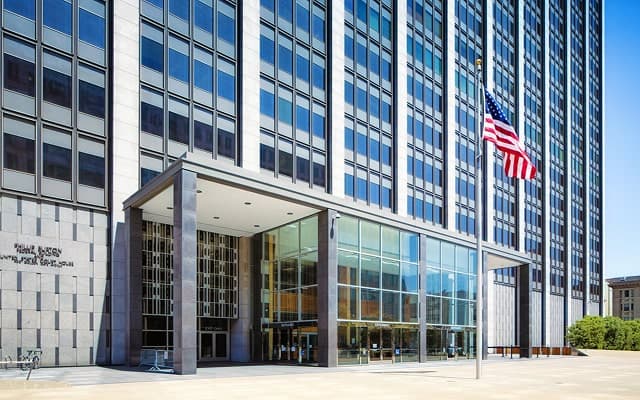
There are four federal district courts, including the U.S. District Court for the Central District of California, the U.S. District Court for the Eastern District, the U.S. District Court for the Northern District of California, and the U.S. District Court for the Southern District of California. Currently, 59 judges are serving in the federal district courts in California. They are nominated by the President and confirmed by the United States Senate.
These federal courts handle cases related to federal law, disputes between parties from different states, and bankruptcy matters. If a decision is made in these courts, it can be appealed to the U.S. Court of Appeals for the Ninth Circuit.
How Many Court Cases Are Filed Each Year in California?
California superior courts received 4,890,450 case filings in fiscal year 2023-24 and disposed of 3,294,424, a combined clearance rate of about 67%. Traffic cases make up nearly 60% of filings, and reported dispositions are incomplete for some courts, which lowers clearance rates.
| Case Type | Annual Filings | % of Total | Common Offense/Subtype | Clearance Rate |
|---|---|---|---|---|
| Traffic | 2,914,251 | 59.6% | Traffic infractions and traffic misdemeanors | 63.9% |
| Criminal | 540,704 | 11.1% | Felonies, misdemeanors, and nontraffic infractions | 64.3% |
| Civil | 809,183 | 16.5% | Unlimited and limited civil, including unlawful detainer | 68.3% |
| Small Claims | 77,461 | 1.6% | Claims of $12,500 or less | 86.7% |
| Domestic Relations | 318,729 | 6.5% | Dissolution, child support, parentage, and domestic violence | 86.9% |
| Juvenile | 60,436 | 1.2% | Delinquency and dependency | 88.0% |
| Other | 169,686 | 3.5% | Probate, mental health, appeals, and habeas corpus | 80.1% |
| Total | 4,890,450 | 100% | — | 67.4% |
How Do I Look Up Court Cases in California?
In California, each court is responsible for maintaining case files and records of matters brought before it. Several courts have established online databases allowing the public to search for specific court records. Interested persons can search records by visiting the court's official website. However, it is essential to note that not all court records are available online. For example, you can only find limited information about divorce or criminal cases on a court's website.
If the desired information is not accessible online, individuals are encouraged to contact the court clerk or visit the court for further assistance. Court clerks can often provide essential details over the phone, including upcoming court dates or the status of filed documents associated with a case.
You may be required to provide information about the case to obtain records. Note that fees may be incurred to get a copy of the courthouse's official court records and transcripts.
Number of Active Judges — State & Federal
California's judges serve on the Supreme Court, the Courts of Appeal, and the 58 county superior courts, which also use commissioners and referees to hear cases. Four federal district courts in the state are staffed by judges nominated by the President and confirmed by the U.S. Senate.
| Court | Jurisdiction | Active Judges | Selection Method |
|---|---|---|---|
| California Supreme Court | Statewide; highest court | 7 | Gubernatorial appointment, confirmed by Commission on Judicial Appointments; retention election, 12-year terms |
| Courts of Appeal | Six appellate districts | ~106 | Gubernatorial appointment, confirmed by Commission on Judicial Appointments; retention election, 12-year terms |
| Superior Courts - Judges | General jurisdiction; 58 counties | ~1,755 | Nonpartisan election, 6-year terms; governor fills vacancies by appointment |
| Superior Courts - Commissioners and Referees | Subordinate judicial officers; 58 counties | ~258 | Appointed by the superior court judges |
| U.S. District Court, Northern District of California | Federal; northern California | 14 | Presidential nomination and Senate confirmation; life tenure |
| U.S. District Court, Eastern District of California | Federal; Central Valley and eastern California | 6 | Presidential nomination and Senate confirmation; life tenure |
| U.S. District Court, Central District of California | Federal; Los Angeles area and central coast | 27 | Presidential nomination and Senate confirmation; life tenure |
| U.S. District Court, Southern District of California | Federal; San Diego and Imperial counties | 12 | Presidential nomination and Senate confirmation; life tenure |
| Total Active Judges | — | ~2,185 | — |
What Court Records Are Not Available to the Public in California?
In California, specific court records are exempt from public disclosure to protect the privacy of individuals involved. The following categories of records are included under this exemption:
- Adoption Records: These documents contain sensitive information about families and adopted individuals, and confidentiality is critical in the adoption process.
- Juvenile Case Files: Records related to minors, including those about juvenile delinquency or dependency cases, are kept confidential to safeguard the rights and well-being of young individuals.
- Tenancy Eviction Records: Documents associated with eviction proceedings are often restricted to protect the sensitive information of both tenants and landlords.
- Mental Health Records: These records encompass private information regarding individuals' mental health diagnoses and treatments, which are protected by confidentiality laws.
- Proprietary Information: This includes trade secrets and confidential business information, disclosure of which could adversely affect the parties involved in legal matters.
Access to these restricted records is limited to the parties directly involved in the case, their legal representatives, or others who have received explicit authorization from the court. This framework helps maintain sensitive information's confidentiality while allowing authorized individuals to access pertinent details for legal purposes.
Average Case Processing Time & Clearance Rates
Processing times in California vary widely by case type: traffic and small claims cases usually close within weeks to a few months, while civil, family, and felony cases take considerably longer. Times are estimated from the Judicial Council's published share of cases disposed within set time frames, and clearance rates are fiscal year 2023-24 figures.
| Case Type | Court Level | Average Processing Time | Description | Clearance Rate |
|---|---|---|---|---|
| Traffic & Parking | Limited Jurisdiction | ~30–90 days | Most infractions end by bail forfeiture, traffic school, or a single arraignment or trial by declaration. | 63.9% |
| Small Claims | Limited Jurisdiction | ~2–4 months | Heard in a single informal hearing without attorneys; about half of cases close within 70 days. | 86.7% |
| Misdemeanor Criminal | Limited Jurisdiction | ~3–6 months | Proceeds from arraignment through pretrial conferences, with most cases resolved by plea. | 69.9% |
| Civil Cases | General Jurisdiction | ~9–15 months | About 62% of unlimited civil cases close within 12 months; most settle or are resolved before trial. | 68.3% |
| Domestic Relations | General Jurisdiction | ~6–12 months | Dissolutions require a six-month waiting period, and contested custody and support matters take longer. | 86.9% |
| Felony Criminal | General Jurisdiction | ~6–12 months | Moves from arraignment and preliminary hearing to plea or trial; about 70% close within 12 months. | 68.4% |